Calculate a batter’s strike rate
Enter the batter’s runs and balls faced from the same innings or the same set of innings. Use whole numbers; balls faced must be greater than zero.
Your calculation will appear here.
The batting strike-rate formula
Batting strike rate describes the rate of scoring in runs per 100 balls faced. You do not need to face 100 balls to calculate it. The multiplication by 100 puts different innings onto the same scale.
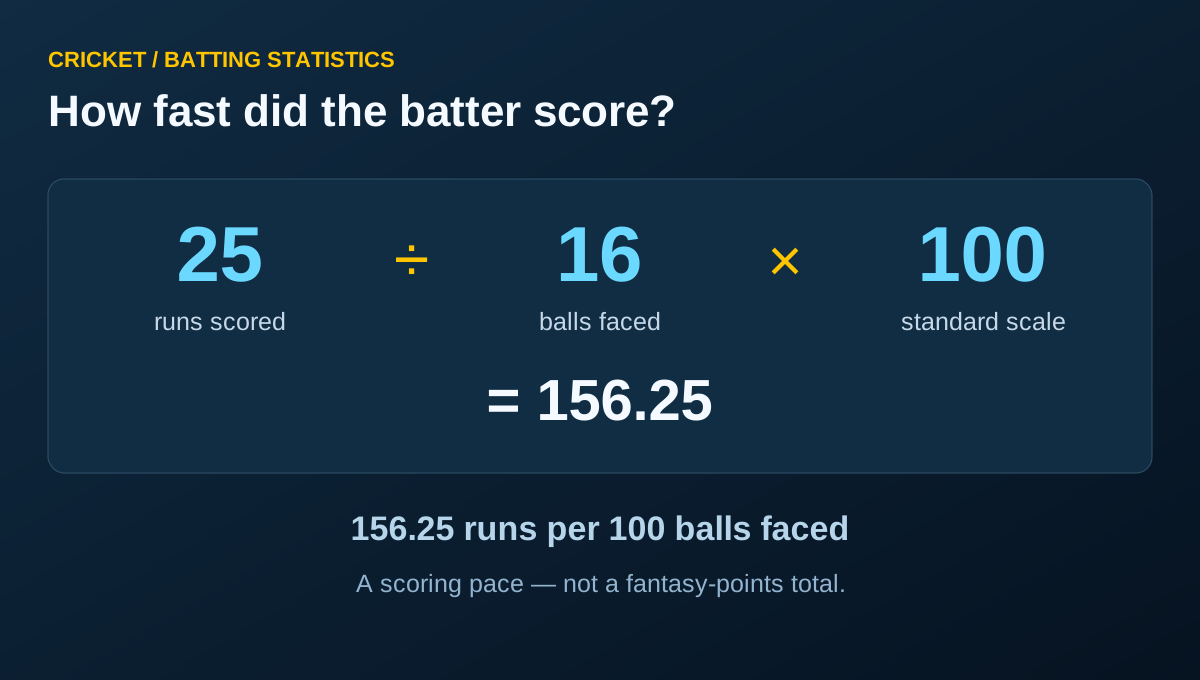
A strike rate of 100 means one run per ball on average. A rate of 150 means 1.5 runs per ball. This is a description of the recorded scoring pace, not a prediction of how many runs a player will score next.
Worked examples
| Runs | Balls faced | Calculation | Strike rate |
|---|---|---|---|
| 25 | 16 | (25 ÷ 16) × 100 | 156.25 |
| 50 | 25 | (50 ÷ 25) × 100 | 200.00 |
| 0 | 10 | (0 ÷ 10) × 100 | 0.00 |
| 1 | 3 | (1 ÷ 3) × 100 | 33.33 |
Results are displayed to two decimal places. The calculation uses the entered runs and balls directly, without rounding an intermediate runs-per-ball figure. Zero runs from a positive number of balls is valid; zero balls gives no defined strike rate.
Which scorecard numbers should I use?
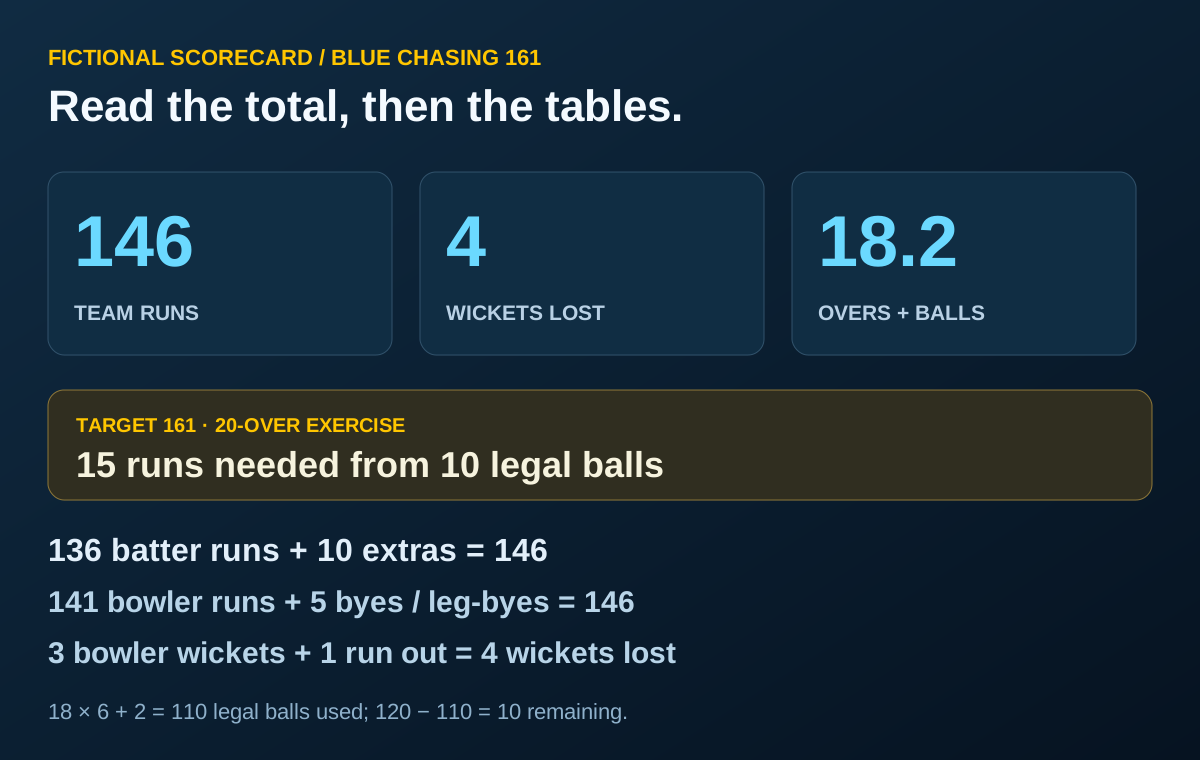
The worked scorecard shows the batting and bowling columns side by side. For a bowler’s runs per over, use the economy-rate calculator.
Use the batter’s R (runs) and B or BF (balls faced) from the same record. Do not use the team total or add extras to the batter’s runs. A not-out mark, such as 25*, is not part of the number: enter 25.
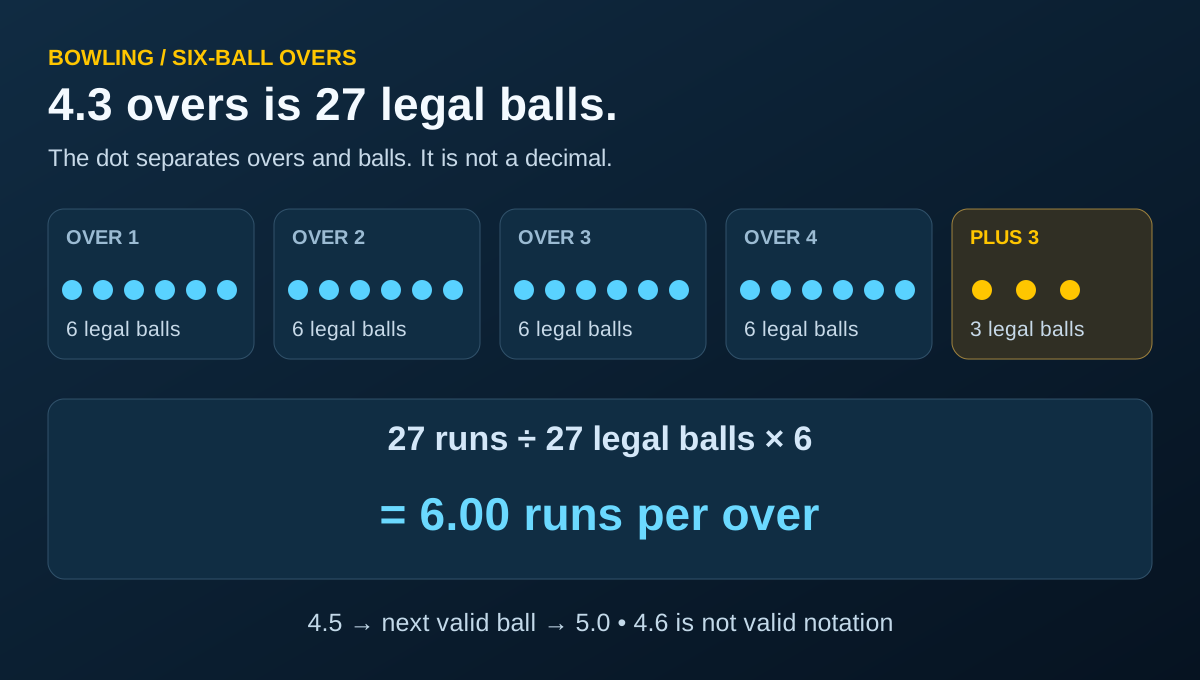
Balls faced is not the same field as the bowler’s overs. Do not enter an over notation such as 3.2. Use the scorecard’s actual balls-faced count rather than trying to infer it from elapsed overs, which may involve another batter and extra deliveries.
For a combined strike rate across innings, add the runs and add the balls, then apply the formula. Do not average the separate strike rates: 10 off 10 and 30 off 15 combine to 40 off 25, which is 160.00, not the simple average of 100 and 200.
What does the result tell me?
Compare the number alongside the runs, balls faced, format and match situation. A rate of 200 from two runs off one ball has much less context than 200 from 80 off 40. This tool does not label a result “good” or “bad” because those judgements need more information than two inputs.
Batting strike rate also differs from bowling strike rate, which measures balls bowled per wicket taken. This calculator accepts batting figures only. It is not a bowling economy, batting average or net-run-rate calculator.
Does this calculate fantasy points?
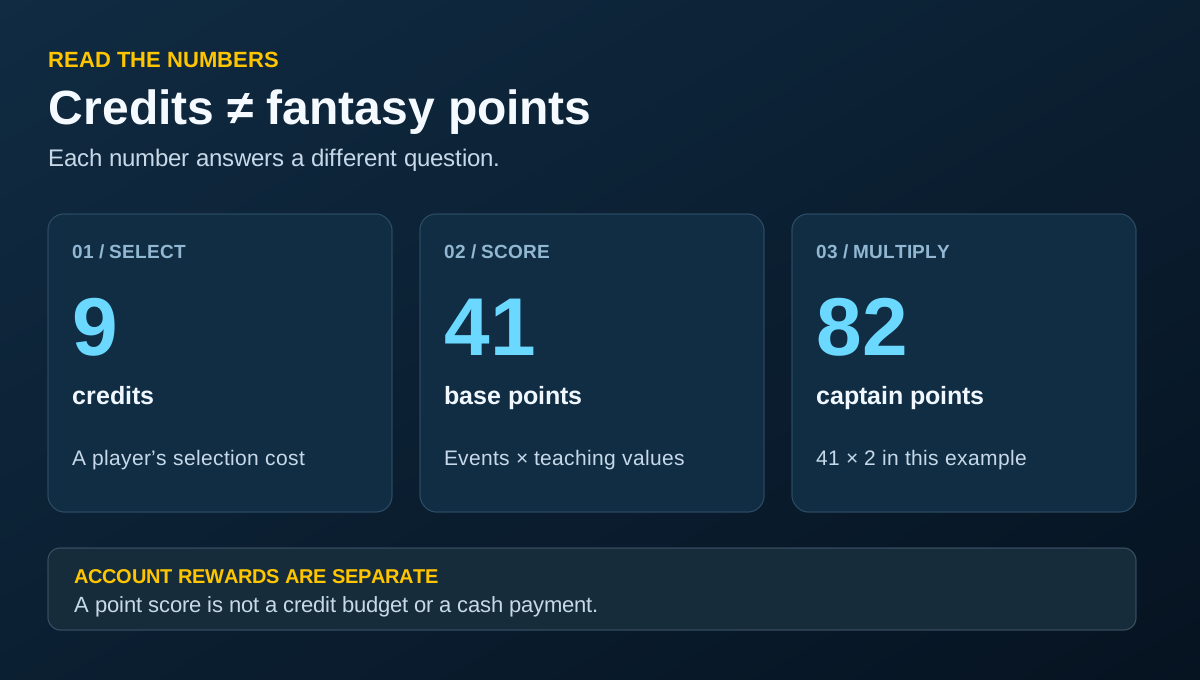
No. A strike rate of 156.25 is a cricket statistic. A fantasy platform may apply a separate bonus or deduction according to its format, thresholds and minimum balls faced. A rate by itself does not tell you whether any adjustment applies.
Continue with fantasy points and rate adjustments to separate the calculation from the rule sheet. For team selection, start with the fantasy cricket beginner’s guide.
Calculator questions
Why can’t balls faced be zero?
The formula divides by balls faced. Division by zero is undefined, so the calculator asks for a positive count instead of returning zero or infinity.
Why are decimals or negative numbers rejected?
Runs and balls faced in this tool are whole-number counts. Decimal rates belong in the output, not these input fields.
Can I use it without an account?
Yes. The calculation runs in the browser and does not require registration.
About this guide. Written by the comeplaygo.com Editorial Team. Examples and diagrams are original teaching materials; figures are not match predictions. Reviewed 2 November 2026.
Definition reference: Beyond the Boundary, established cricket statistics, page 4 (PDF). All example results are independently calculated.